In a study of 2,628 first encounters, people higher in narcissism were more popular at first sight — and the most toxic traits (entitlement, exploitativeness) drove the charm. First impressions favor them for everyone. It was never a defect in you.
Strong evidence
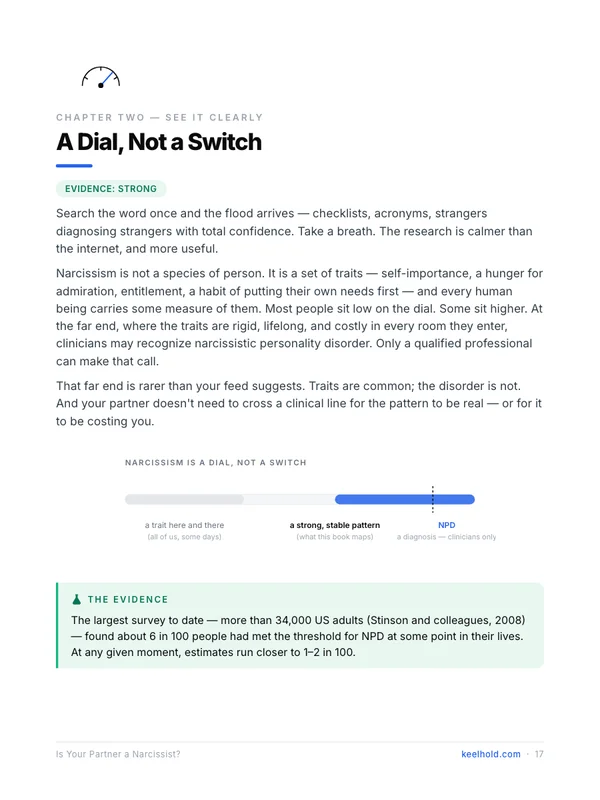
In the largest survey to date (34,653 US adults), about 6 in 100 people had met the threshold for narcissistic personality disorder at some point in their lives. Traits are common; the disorder is not — and only a clinician can make that call.
Strong evidence
Across 52 studies and 11,582 people, commitment is explained by satisfaction, alternatives, and everything already invested — years, home, story. Staying isn't weakness. It's an equation, and you can change its terms.
Strong evidence
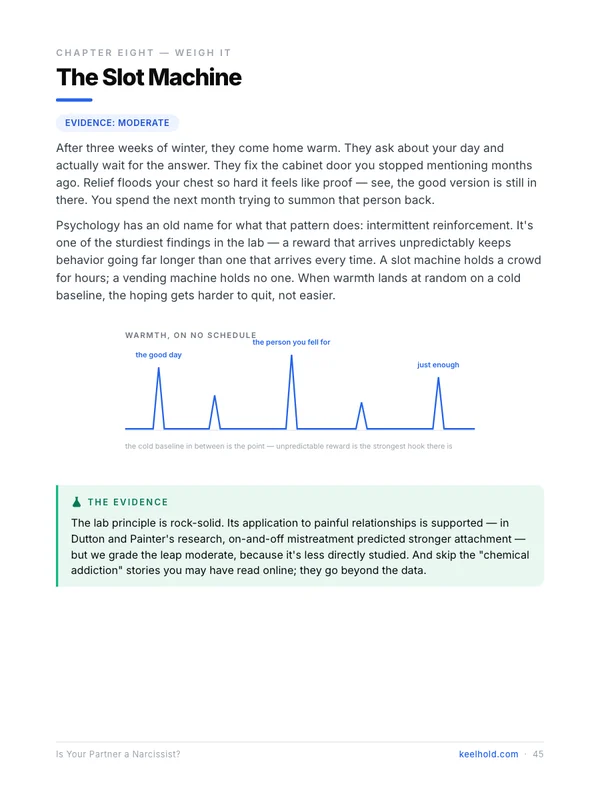
Intermittent mistreatment plus a power imbalance predicts stronger — not weaker — attachment after separation. The pull you feel has a documented mechanism. It is not a sign you were wrong to leave.
Moderate evidence
In a study of 464 people after a breakup, keeping watch on an ex through social media was linked to more distress, more longing, and less personal growth. Unfollowing isn't petty — it's protective.
Moderate evidence
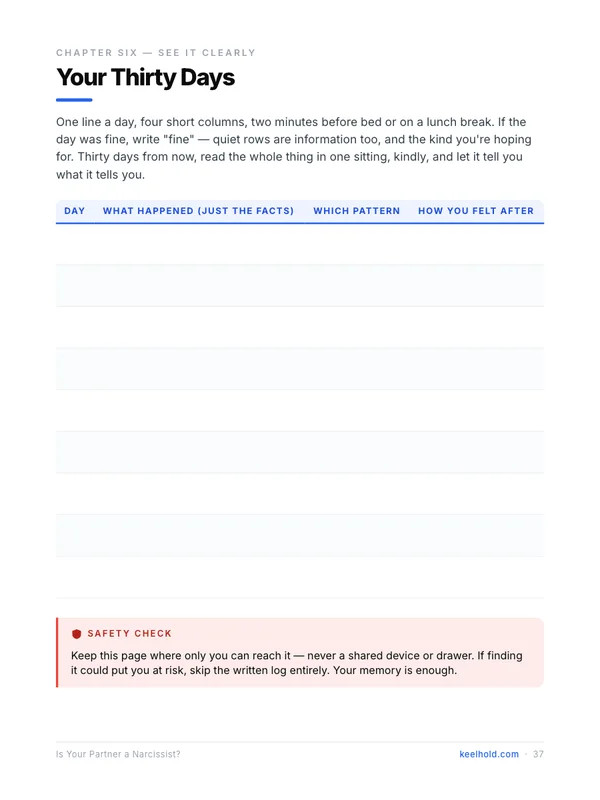
Across 146 studies, expressive writing — putting hard experiences into words on paper — shows small but real benefits for wellbeing. Not a cure. A complement, and one you can start tonight.
Moderate evidence
And where the evidence is thin — "love bombing" has one citable study, "gray rock" has none — the guide says so, plainly. An honest "we don't know yet" will serve you better than a confident myth.
Emerging evidence
These studies describe general findings about patterns, on average. They say nothing final about any one person — only a qualified professional can assess someone. This guide is educational, not therapy or diagnosis.